
By: International Justice Mission (IJM)
The Internet is always on. The online world is part of everyday life for our kids. It’s where they learn, play, connect with friends and explore their interests. But the same features that make those experiences possible can also expose children to people who want to exploit their trust.
At IJM, our work to protect children from online sexual exploitation has given us insight into how this kind of harm can begin and unfold. We work alongside law enforcement, justice systems, aftercare partners and others responding to this crime around the world. And one thing we know is that understanding the risks can help prevent harm.
Parents, caregivers and other trusted adults have an important role to play. Simple, ongoing conversations can help children navigate the digital world more safely and confidently.
Here are three conversations you can start today.
Where can unsafe online interactions happen?
Unsafe interactions can happen across many of the same online spaces children use every day. Any platform with messaging, usernames or opportunities to interact with people they don’t know can carry some level of risk.
This can include:
- Video games or online multiplayer games where players interact in real time, chatting, teaming up and competing together
- Social media platforms where kids share aspects of their lives and interact through likes, comments and private messaging
- Kids’ learning apps that include social or interactive features such as voting, commenting or collaborative play.
Because online spaces cross borders, someone seeking to harm a child does not need to be physically nearby.
From chat to harm: how online exploitation can unfold
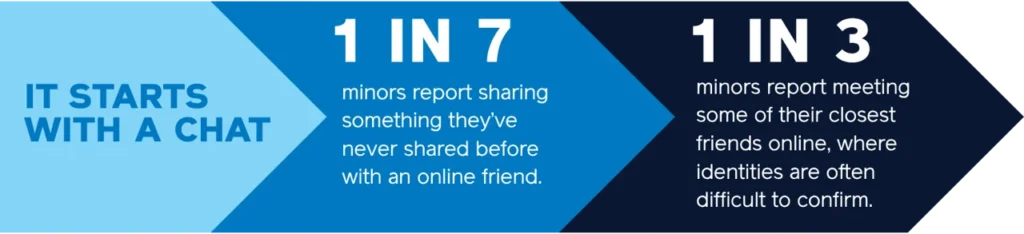
The reality is sobering, but the good news is together we can make a difference.
Online exploitation doesn’t always begin with something that looks obviously dangerous. An interaction may start as an ordinary conversation or new friendship.
Over time, a perpetrator may build trust, ask increasingly personal questions or encourage a child to move from a public conversation into a private chat, away from moderators or other people who might see what’s happening.
Understanding how these interactions can develop can make the warning signs easier to recognise.
Tip 1: Prepare your children for the digital world
The internet evolves rapidly, with new apps, platforms and trends popping up all the time.
Regular conversations about the online world can help children build the awareness and confidence to recognise red flags wherever they encounter them.
These conversations can be as simple as talking about the games and apps they enjoy, who they interact with online, image-sharing, privacy, and what they might do if a conversation makes them feel unsure or uncomfortable.
What can you do?
Use age-appropriate language to explain online risks.
Talk about image-sharing, online friendships and how to respond to uncomfortable situations.
Explore privacy and safety settings together
Use scripted discussion guides from trusted organisations to help guide the conversation. Learn more from the eSafety Commissioner here.
A conversation you could try
“Who do you like talking to when you’re playing online? Are they people you know offline too?”
Simple questions about what children enjoy online can help make their digital lives part of everyday family conversation.
Tip 2: Move beyond “Stranger Danger”
We all grew up hearing it: “Don’t talk to strangers.” But much of the digital world is built to connect strangers, so this advice doesn’t always translate neatly to children’s online lives.
Online, it can be difficult to know who someone really is. Someone may seem friendly, share similar interests or even appear to be another child. Talking about some of the behaviours associated with unsafe interactions can help children recognise when a conversation may be crossing a boundary.
Red flags to watch for in online conversations
It may be worth checking in if someone online:
- Asks your child to keep the conversation a secret
- Wants to move the chat to a different app or platform
- Starts asking personal questions, like age, school or location
- Sends or asks for photos, especially if the conversation turns flirty or uncomfortable
- Says things like “You’re mature for your age” or “I feel like I can really trust you”
- Tries to make them feel guilty for not responding quickly
- Quickly says they feel unusually close to them, or that they’re “so connected” or “just like them”.
Talk it through together
Role-play different scenarios with your child so they can practice how to respond or disengage completely.
You could ask:
“What would you do if someone you met in a game asked you to start messaging them somewhere private?”
“What are some things someone might say online that would make you feel unsure?”
Giving children a chance to think through these situations can help them feel more prepared if something similar happens.
Tip 3: Be a safe place your child can turn to for help

The most powerful protection you can offer your child is to be the person they know they can come to.
Only 6% of kids ages 9–17 told a trusted adult after being sent a nude photo by someone they believed to be an adult. And 84% of sextortion victims didn’t seek help because they felt too embarrassed or ashamed.
For some children, embarrassment, shame or fear of getting into trouble can make asking for help incredibly difficult. This can be particularly dangerous in cases of sextortion, where an offender threatens to share explicit images or videos unless their demands are met.
Even if your child has made a mistake, it’s important that they know they can turn to you for help.
How an adult responds when a child speaks up can help keep that door open. Listening calmly, thanking them for telling you and reassuring them that their safety comes first can remind them they don’t have to deal with the situation alone.
Source: Thorn.org 2022 Online Grooming Report and IJM 2025 Online Safety Guide
What can you do?
- Tell your child they can always come to you, especially if they feel scared or confused
- Identify together who the trusted adults in their life are
- Emphasise that their safety is more important than any rule they might have broken
Keep lines of communication open, even when it’s uncomfortable. A simple promise can go a long way.
“If something happens online that makes you scared, worried or uncomfortable, you can tell me. Whatever has happened, we can work through it together.”
Conversation Starters for Parents
Talking about online safety doesn’t need to be one big conversation. Small check-ins can help make talking about your child’s online life feel normal and remind them that they can come to you when they need to.
Here are some conversation starters:
OPEN AND HONEST DIALOGUE…

“Do you ever talk to people online who you don’t know in real life?”
“Do you know that people can pretend to be someone they’re not online?”
What would you do if someone online asked you to move the conversation somewhere private?”
“Has anyone online ever asked you to keep your chats secret from me or another adult?”
“Has anyone ever asked you for a photo or video online that made you feel unsure?”
“If something online ever felt off, who are three adults you could tell?”
There aren’t always perfect words. What matters is helping children know that conversations about their online lives are welcome and that trusted adults are there to help.
If something has already happened
Sometimes this information may raise concerns about an interaction that has already happened. If your child tells you about something online that has frightened, worried or confused them, your response can help them feel safe asking for help.
Stay calm, listen and reassure them that you’re glad they told you. Depending on what has happened, the next steps may include preserving relevant information, reporting or blocking an account, or seeking additional support.
- Australians can report Child Sexual Abuse Materal (CSAM) to the eSafety Commissioner to ask that it be taken down from online service providers.
- To report suspected grooming, sextortion, or sadistic online exploitation, contact the Australian Centre to Counter Child Exploitation.
For Australian families, the eSafety Commissioner provides practical advice for parents and caregivers, including information about unwanted contact, online sexual abuse and pathways for reporting harmful online content.
If you believe a child is in immediate danger, contact emergency services.
Keeping children safe online takes all of us
Parents and caregivers have an important role in helping children navigate their online lives. Keeping children safe online is also a shared responsibility, involving technology companies, governments, law enforcement, communities and justice systems.
At IJM, we believe every child deserves to be safe, whether at home, in their community or online.
Through our global teams and local partners, IJM works to:
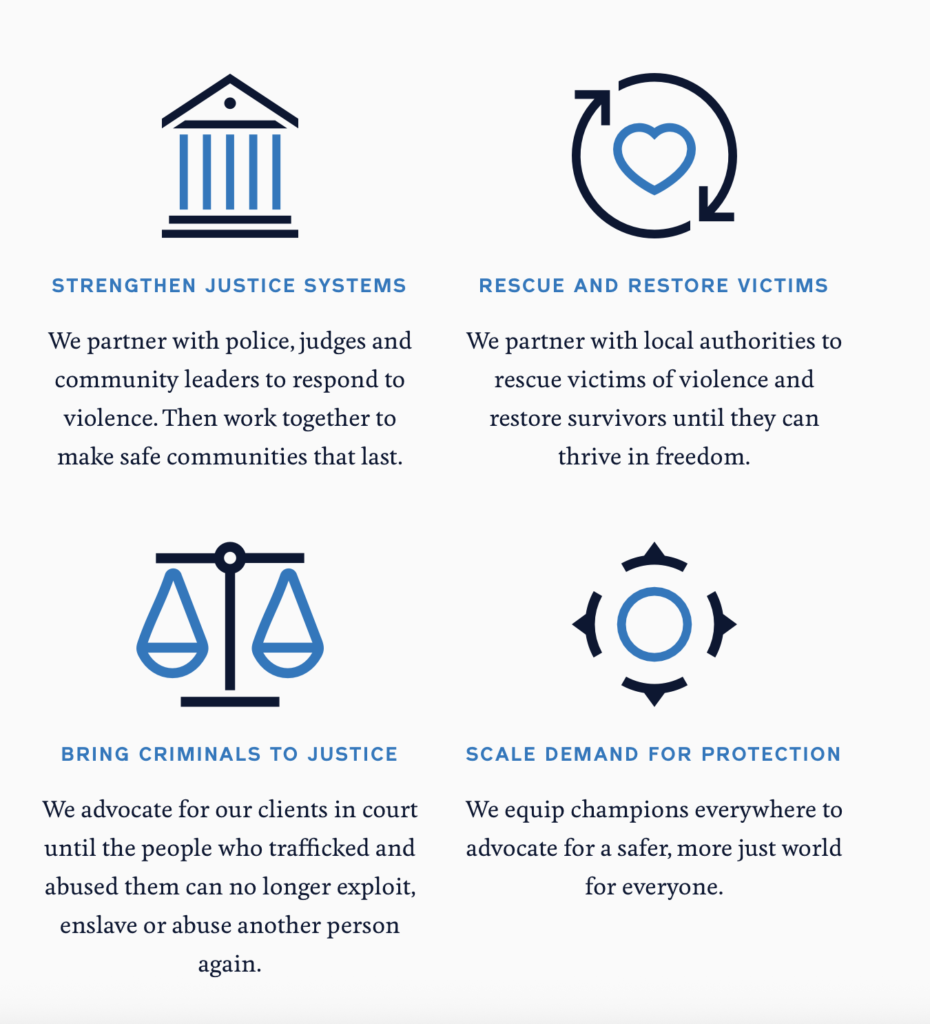
This includes confronting online sexual exploitation of children, a horrific crime where predators pay to abuse children through video and messaging platforms.
IJM works alongside law enforcement, aftercare partners and other experts to protect children, hold perpetrators accountable and strengthen the systems designed to keep people safe.
Every conversation can make a difference.
Keep talking. Stay curious about the online spaces your child enjoys. Help them recognise when something doesn’t feel right. And remind them that they can always come to you.
Because every child deserves the freedom to learn, play, connect and grow in safety.
Learn more about IJM’s work to protect children from online sexual exploitation.
Article supplied with thanks to IJM
IJM is committed to protecting the dignity, privacy and safety of vulnerable people. Names, details and images may be changed or represented by actors to protect identities. All stories and images are used with informed consent and safeguarding practices.
Feature image: Supplied (IJM Australia)