
By: Mark McCrindle
People of all ages love to play sport. It’s key for young people to get active, adults to stay socially connected, and excellent for mental health and wellbeing for people of all ages.
Yet as we live longer, how does engagement with sports evolve, and as we live in increasingly urban environments, what will the future of sport look like?
Pickleball is a great example of what the future of sport could evolve to. As a relatively new sport, invented in 1965 in the USA by Joel Pritchard and Bill Bell, the game began as a backyard pastime that combined elements of tennis, badminton, and table tennis. As a game designed for the whole family, it is fascinating to see how six decades later, it has evolved into one of the fastest-growing sports around the world.[1]
Pickleball has captured the world’s attention, particularly in recent years with global search of the term peaking in the northern hemisphere’s Summer of 2025.
Pickleball has captured the world’s attention, particularly in recent years with global search of the term peaking in the northern hemisphere’s Summer of 2025.

Despite almost 14m players in the US alone , the sport has not yet made its way into the Olympics, but some say that is just a matter of time. There is, however, 3 international peak bodies which most likely need to merge into one international federation before it can become a part of the Olympic games, which may happen by Australia’s 2032.
Why is Pickleball rising in popularity so quickly?
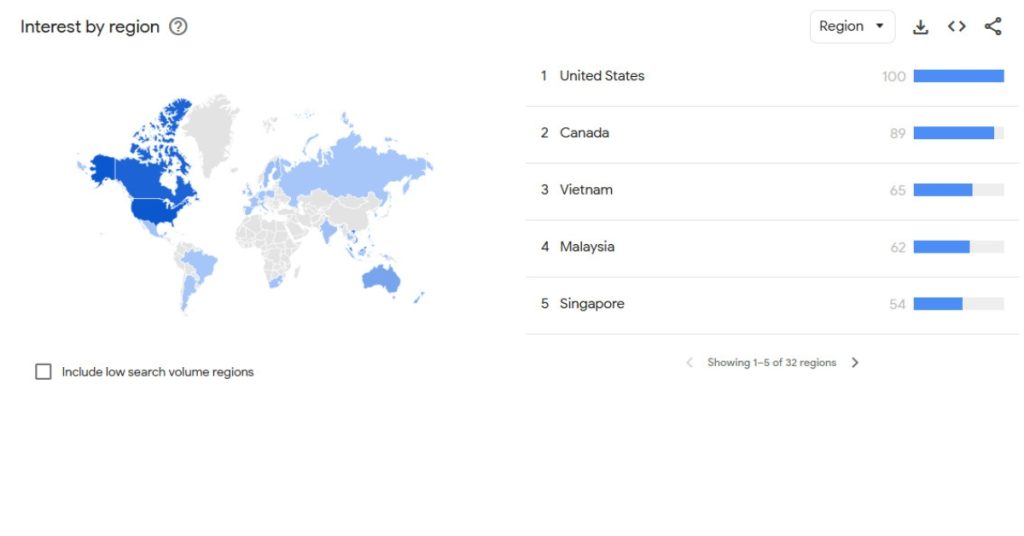
In the United States and Canada, online searches for pickleball have risen sharply over the past five years, showing its shift from a casual activity to a national favourite. The same growth can be seen in the Asia Pacific region, where more communities are embracing the game. Its appeal lies in how simple it is to learn, how social it can be, and how it brings together players of all ages.
Pickleball’s rise reflects five key trends shaping the future of sport:
Social connection through play. Many people are choosing activities that allow them to stay active while building relationships. Pickleball supports this by creating a friendly and inclusive team atmosphere both on and off the court.
Health and wellbeing focus. With increasing awareness of the importance of movement and wellbeing for people of all generations, pickleball offers a low-impact yet energising way to stay fit and engaged. And despite it being low-impact, pickleball is fast-paced which is great for reflexes, focus and agility.!
Inclusivity and accessibility. The game requires minimal equipment and space, making it easy for anyone to join in, regardless of age, skill or experience.
Community-led growth. The sport’s success has been driven largely by local groups, schools, and neighbourhood courts rather than large professional leagues, showing the power of community enthusiasm and grass roots movements.
Low cost, mobile and minimal gear requirements. The sport of pickleball only has three simple pieces of equipment. The ball, paddles or bats and the net. It is lightweight, easy to set up and quite easy to carry and move quickly.
From small neighbourhood gatherings to international tournaments, pickleball is more than just a trend, it is a reminder that sport, in all its forms, has the power to bring people together. Whether through friendly competition, shared goals or simple moments of play, every sport contributes to stronger, healthier and more connected communities. That’s what every generation needs more of in the future.
Article supplied with thanks to McCrindle.
About the Author: McCrindle are a team of researchers and communications specialists who discover insights, and tell the story of Australians – what we do, and who we are.
Feature image: Canva